XUYE EQUIPMENT
- Language Switching
Search the whole station
Industrial rotary dryer is a highly efficient and reliable drying system designed for bulk solids and powders. It is widely used in industries such as mining, chemical, construction, agriculture, and biomass processing. Rotary dryers provide a continuous drying process with excellent uniformity, allowing large-scale material handling with consistent results.
The system operates by rotating a large cylindrical drum slightly inclined to the horizontal. Hot air passes through the drum as the material tumbles inside, effectively reducing its moisture content. This combination of heat transfer and mechanical agitation makes rotary dryers one of the most versatile industrial drying technologies available today.
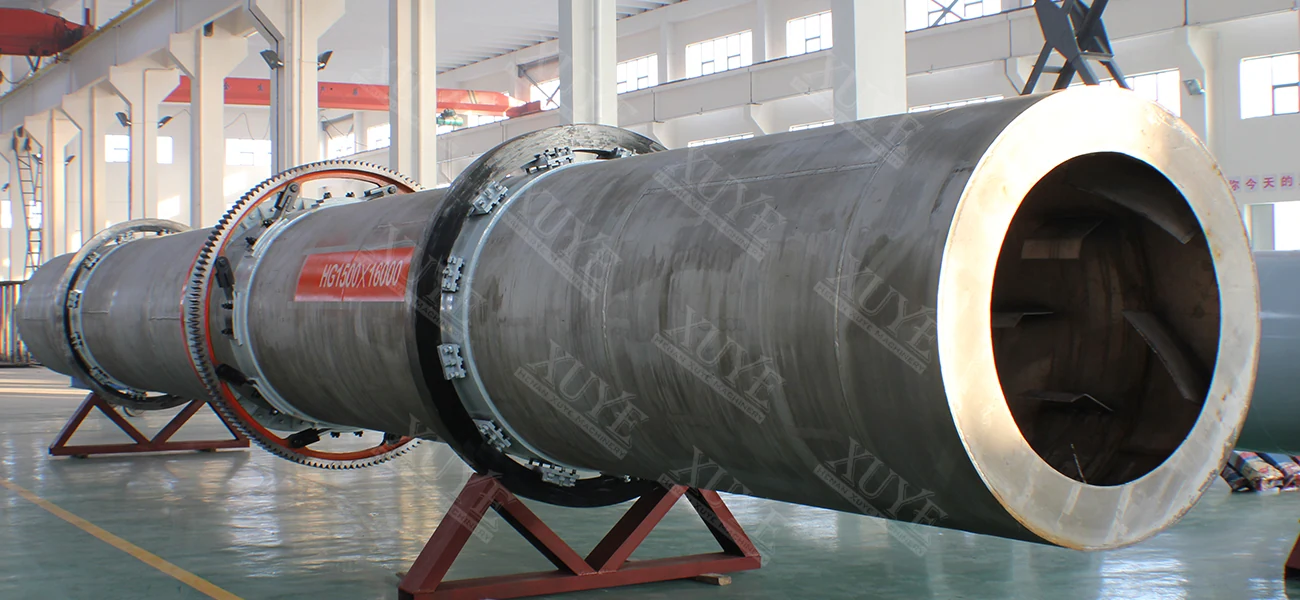
An industrial rotary dryer (also called a rotary drum dryer) consists of a rotating cylindrical shell supported by trunnions or riding rings. The drum rotates slowly while the hot gases—produced from a burner or external heat source—flow either co-currently or counter-currently through the system.
Inside the drum, the material moves gradually from the feed end to the discharge end, undergoing a controlled drying process. Depending on the application, the dryer can be designed as direct-heated or indirect-heated:
A typical industrial rotary dryer includes the following parts:
The main body of the dryer, usually made from carbon steel or stainless steel. It rotates continuously, ensuring even exposure of materials to the drying air.
Comprising a motor, gearbox, and girth gear, it provides stable and adjustable rotational speed for efficient drying control.
Riding rings, trunnion wheels, and thrust rollers support the drum’s rotation and maintain proper alignment during operation.
Provides the necessary thermal energy. It can be powered by gas, oil, biomass, or electricity, depending on energy availability and material characteristics.
Fans, ducts, and dampers regulate the flow of hot gases and exhaust air through the system, ensuring efficient heat transfer.
Hoppers, conveyors, and rotary valves handle the continuous feeding and discharge of materials, minimizing manual intervention.
Cyclones, bag filters, or scrubbers capture airborne particles, maintaining a clean working environment and meeting environmental standards.
The operation of an industrial rotary dryer is based on thermal conduction and mass transfer. The process can be summarized in the following steps:
This continuous drying mechanism ensures uniform drying, high thermal efficiency, and minimal material degradation.
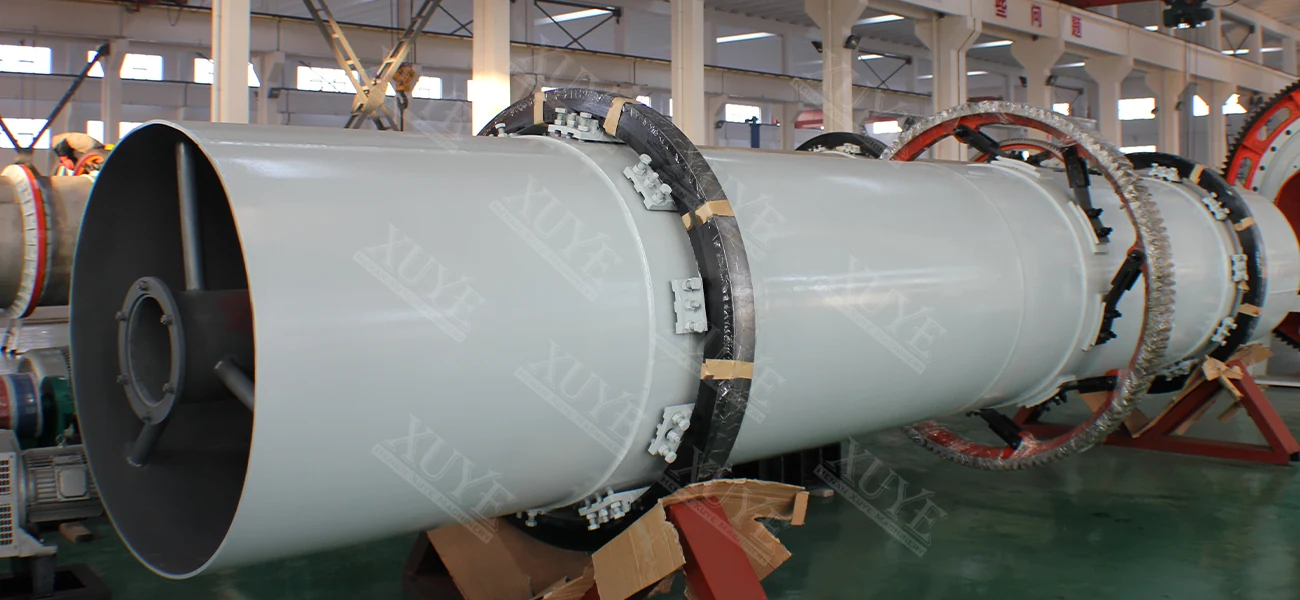
The most common design, suitable for non-sensitive materials like minerals, sand, and fertilizers. Hot gases directly contact the feed material.
Uses a heat exchanger or external shell heating. Ideal for powders, chemicals, or materials that must not contact combustion gases.
A high-efficiency version that uses three concentric drums to increase residence time and improve thermal utilization.
Operates under reduced pressure to lower the drying temperature, used for heat-sensitive and solvent-based materials.
Rotary dryers utilize direct heat transfer and tumbling motion, achieving high evaporation rates with minimal energy loss.
Capable of running 24/7, suitable for large-scale production lines in industrial plants.
Adaptable to various materials—such as sand, limestone, clay, coal, biomass, and fertilizer—by modifying the drum configuration and drying temperature.
Drum speed, air temperature, and residence time can be precisely controlled to meet specific moisture targets.
Built with high-quality steel and wear-resistant linings for long service life under harsh industrial conditions.
Simple mechanical design with few moving parts ensures low downtime and easy repair.
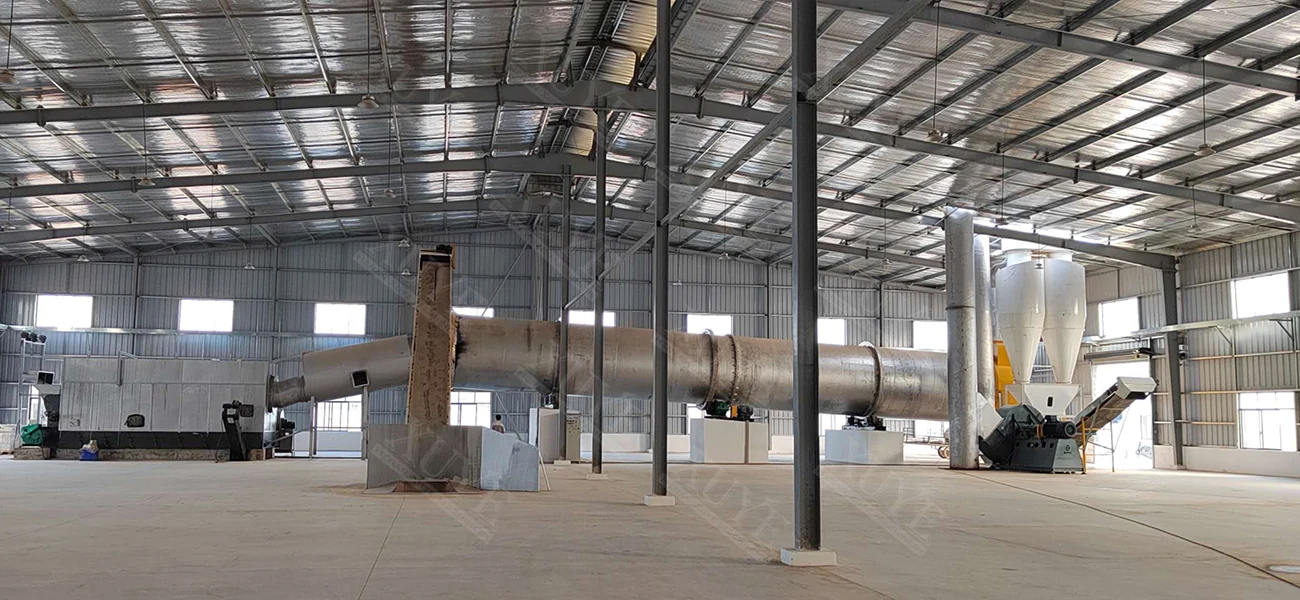
| Model | Cylinder diameter(mm) | Cylinder length(mm) | Cylinder volume(m3) | Cylinder rotary speed (r/min) | Power(kW) | Weight(t) |
| 0.6×5.8 | 600 | 5800 | 1.7 | 1-8 | 3 | 2.9 |
| 0.8×8 | 800 | 8000 | 4 | 1-8 | 4 | 3.5 |
| 1×10 | 1000 | 10000 | 7.9 | 1-8 | 5.5 | 6.8 |
| 1.2×5.8 | 1200 | 5800 | 6.8 | 1-6 | 5.5 | 6.7 |
| 1.2×8 | 1200 | 8000 | 9 | 1-6 | 5.5 | 8.5 |
| 1.2×10 | 1200 | 10000 | 11 | 1-6 | 7.5 | 10.7 |
| 1.2×11.8 | 1200 | 11800 | 13 | 1-6 | 7.5 | 12.3 |
| 1.5×8 | 1500 | 8000 | 14 | 1-5 | 11 | 14.8 |
| 1.5×10 | 1500 | 10000 | 17.7 | 1-5 | 11 | 16 |
| 1.5×11.8 | 1500 | 11800 | 21 | 1-5 | 15 | 17.5 |
| 1.5×15 | 1500 | 15000 | 26.5 | 1-5 | 15 | 19.2 |
| 1.8×10 | 1800 | 10000 | 25.5 | 1-5 | 15 | 18.1 |
| 1.8×11.8 | 1800 | 11800 | 30 | 1-5 | 18.5 | 20.7 |
| 1.8×15 | 1800 | 15000 | 38 | 1-5 | 18.5 | 26.3 |
| 1.8×18 | 1800 | 18000 | 45.8 | 1-5 | 22 | 31.2 |
| 2×11.8 | 2000 | 11800 | 37 | 1-4 | 18.5 | 28.2 |
| 2×15 | 2000 | 15000 | 47 | 1-4 | 22 | 33.2 |
| 2×18 | 2000 | 18000 | 56.5 | 1-4 | 22 | 39.7 |
| 2×20 | 2000 | 20000 | 62.8 | 1-4 | 22 | 44.9 |
| 2.2×11.8 | 2200 | 11800 | 44.8 | 1-4 | 22 | 30.5 |
| 2.2×15 | 2200 | 15000 | 53 | 1-4 | 30 | 36.2 |
| 2.2×18 | 2200 | 18000 | 68 | 1-4 | 30 | 43.3 |
| 2.2×20 | 2200 | 20000 | 76 | 1-4 | 30 | 48.8 |
| 2.4×15 | 2400 | 15000 | 68 | 1-4 | 30 | 43.7 |
| 2.4×18 | 2400 | 18000 | 81 | 1-4 | 37 | 53 |
| 2.4×20 | 2400 | 20000 | 91 | 1-4 | 37 | 60.5 |
| 2.4×23.6 | 2400 | 23600 | 109 | 1-4 | 45 | 69.8 |
| 2.8×18 | 2800 | 18000 | 111 | 1-3 | 45 | 62 |
| 2.8×20 | 2800 | 20000 | 123 | 1-3 | 55 | 65 |
| 2.8×23.6 | 2800 | 23600 | 148 | 1-3 | 55 | 70 |
| 2.8×28 | 2800 | 28000 | 172 | 1-3 | 75 | 75 |
| 3×20 | 3000 | 20000 | 14 | 1-3 | 55 | 75 |
| 3×23.6 | 3000 | 23600 | 170 | 1-3 | 75 | 85 |
| 3×28 | 3000 | 28000 | 198 | 1-3 | 90 | 91 |
| 3.2×23.6 | 3200 | 23600 | 193 | 1-3 | 90 | 112 |
| 3.2×32 | 3200 | 32000 | 257 | 1-3 | 110 | 129 |
| 3.6×36 | 3600 | 36000 | 366 | 1-3 | 132 | 164 |
| 3.8×36 | 3800 | 36000 | 408 | 1-3 | 160 | 187 |
| 4×36 | 4000 | 36000 | 452 | 1-3 | 160 | 195 |
Industrial rotary dryer Video