XUYE EQUIPMENT
- Language Switching
Search the whole station
Coconut shell activated carbon is a high-performance adsorbent material made from natural coconut shells through high-temperature carbonization and activation processes. With the rapid development of environmental protection, water treatment, air purification, food, and pharmaceutical industries, Coconut Shell Activated Carbon Machinery has gradually become the focus of global markets. This article provides a comprehensive overview of equipment types, production processes, applications, and market trends of coconut shell activated carbon machinery.
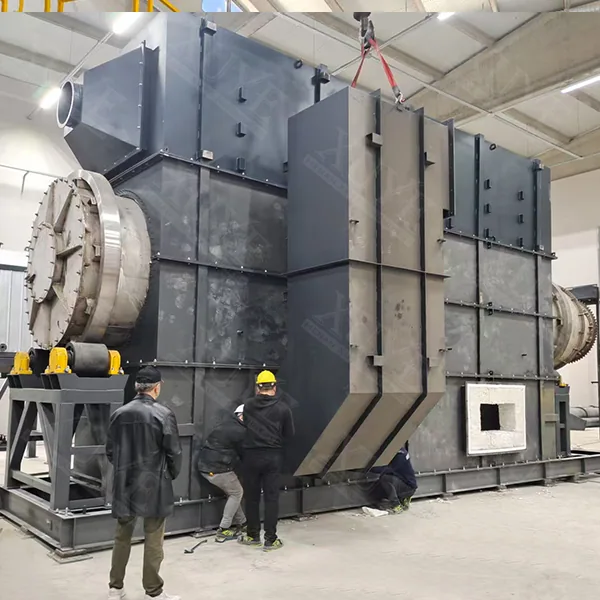
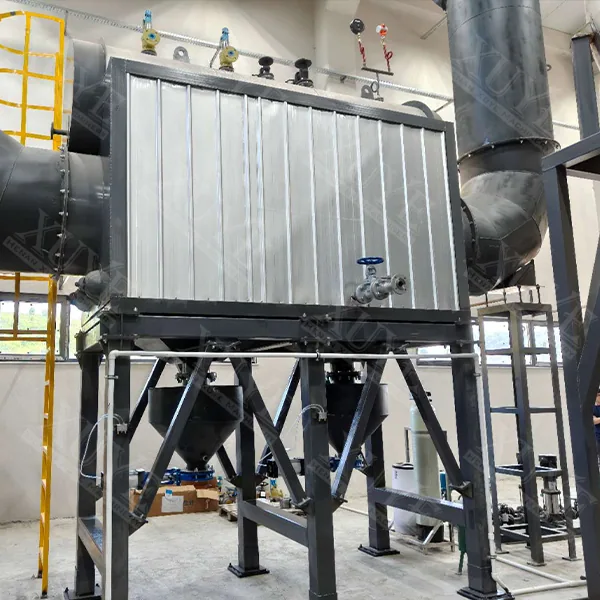
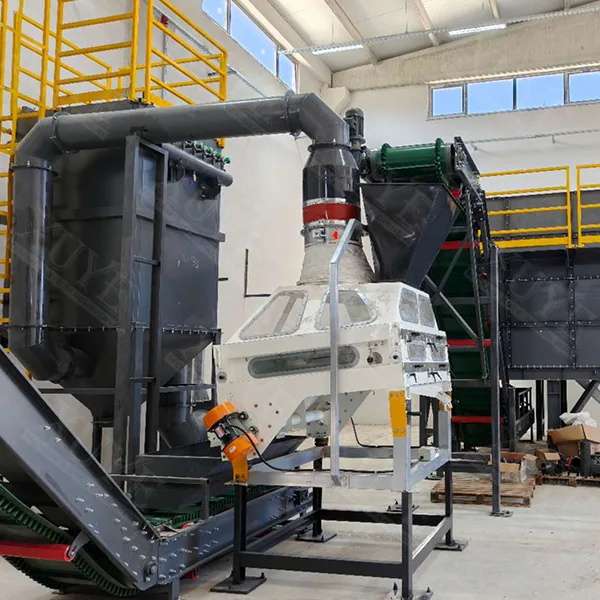
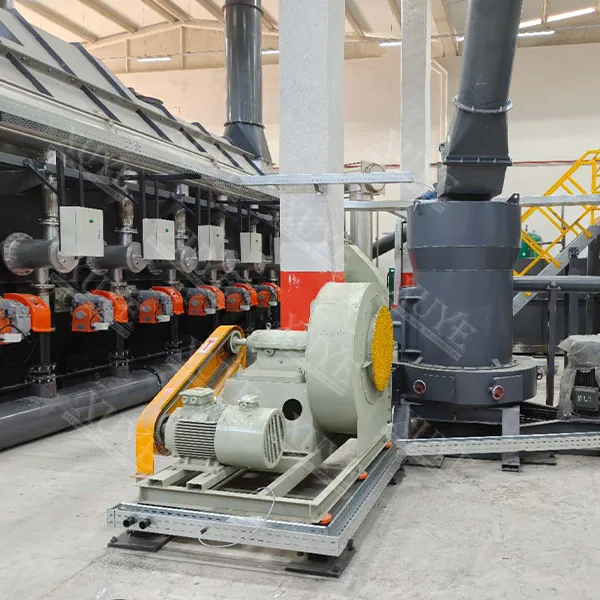
Coconut Shell Activated Carbon Machinery refers to a complete set of equipment used to convert coconut shells into activated carbon. It generally includes carbonization furnaces, activation furnaces, crushers, screening machines, dryers, and packaging machines, enabling a full production line from raw coconut shells to high-quality activated carbon products.
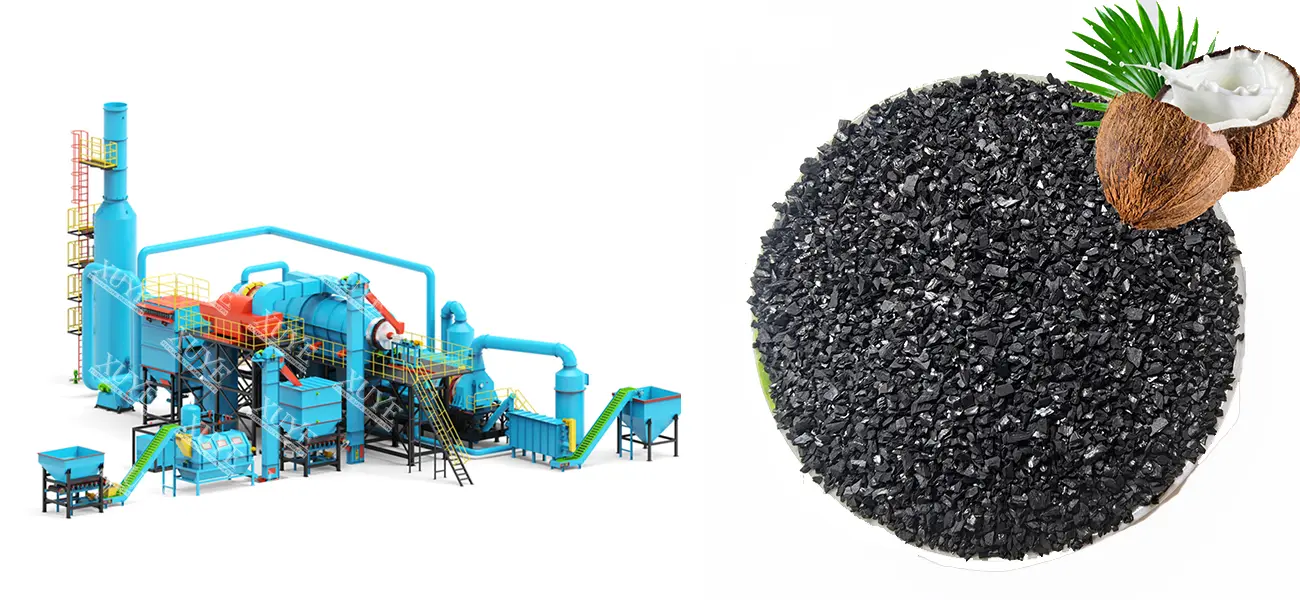
Coconut shells are heated in an anaerobic or oxygen-limited environment at 500–700℃, decomposing volatile substances to obtain primary char (coconut shell charcoal). Common equipment includes coconut shell carbonization furnaces and continuous carbonization kilns.
The carbonized coconut shell charcoal is placed in an activation furnace, where it is treated at 800–1000℃ with steam or carbon dioxide. The oxidation reaction develops a porous structure, resulting in coconut shell activated carbon with high surface area and strong adsorption capacity.
After carbonization and activation, the material undergoes crushing, screening, acid washing, drying, and packaging, ensuring the final activated carbon meets requirements for particle size, purity, and moisture content.
Used in drinking water purification, industrial wastewater treatment, and advanced sewage treatment.
Applied in industrial waste gas control, indoor air purifiers, and automotive air filters.
Used for decolorization, sugar refining, and purification of medicines.
Applied in precious metal extraction, catalyst carriers, and solvent recovery.
| capacity | 5-8t/d | 8-10t/d | 10-12t/d | 12-15t/d | 15-20t/d |
| Dryer model | HG-800 | HG-1000 | HG-1200 | HG-1500 | HG-1800 |
| Dryer power | 3kw | 4kw | 7.5kw | 15kw | 22kw |
| continuous carbonization furnace model | TH-1500 | TH-1500 | TH-1800 | TH-2000 | TH-2000 |
| Carbonization temperature | 600-850℃ | ||||
| Fixed carbon content after carbonization | 70-80% | ||||
| Carbonization furnace drum material | 309S/310S | 309S/310S | 309S/310S | 309S/310S | 309S/310S |
| Activation furnace model | HN-5 | HN-8 | HN-10 | HN-12 | HN-15 |
| Activation furnace power | 15kw | 22kw | 30kw | 37kw | 37kw |
| Activation furnace chamber material | QQ345+nano thermal insulation board+refractory | ||||
| Activation temperature | 850-950℃ | ||||
| Activator | Water vapor or Phosphoric acid (customized according to customer requirements, equipment design will be updated) | ||||
| Activation time | 1-2h | ||||
| Cooling machine model | GTL-1004 | GTL-1204 | GTL-1206 | GTL-1504 | GTL-1506 |
| Temperature after cooling | ≤40℃ | ||||
| Activated carbon crusher model | SGP-400 | SGP-400 | SGP-600 | SGP-800 | SGP-800 |
| Activated carbon finished product size | 4-60mesh | ||||
| Activated carbon iodine value | 800-1300mg/g | ||||
| Activated carbon specific surface area | 800-1500m²/g | ||||
| Activated carbon strength | ≥95 | ||||
| CTC | ≥60% | ||||
| Filling density | 0.45-0.55g/cm3 | ||||
| Activated carbon ash | ≤3% | ||||