XUYE EQUIPMENT
- Language Switching
Search the whole station
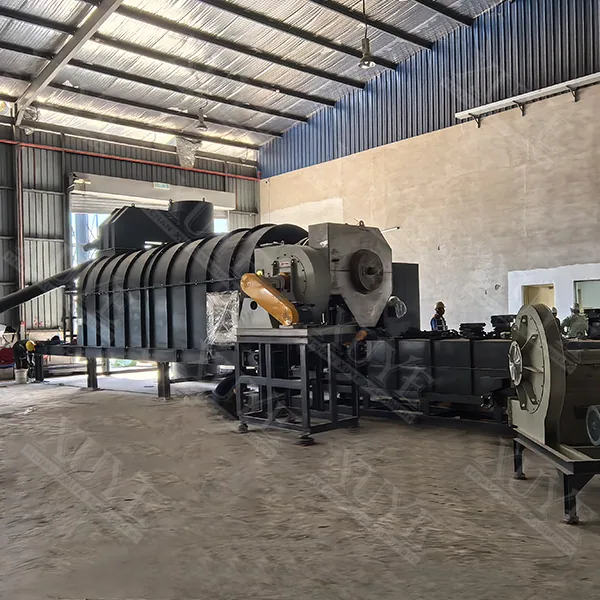
The activated carbon rotary kiln is a key piece of equipment used in the high-temperature carbonization and activation stages of activated carbon production. Through continuous mechanized operations, it converts carbon-containing raw materials such as coal and wood into highly adsorbent activated carbon products. Its core function is to achieve pyrolysis of the material under high-temperature conditions. It is widely used in environmental protection, chemical engineering, food processing, gold extraction, and other fields for water purification, decolorization, and purification, as well as waste gas treatment.
Activated carbon is a porous carbon material with an exceptionally high surface area and excellent adsorption capacity. Owing to its unique structure, it is widely used in water treatment, air purification, chemical industry, metallurgy, pharmaceuticals, food processing, and new energy sectors. With stricter environmental regulations and the global push toward carbon neutrality, the demand for activated carbon is rapidly increasing. As a result, high-efficiency and eco-friendly Activated Carbon Production Equipment has become the backbone of the industry.
Activated carbon production equipment refers to the complete set of machinery used for carbonization, activation, cooling, screening, and packaging. Together, they form an integrated activated carbon production line, enabling enterprises to achieve large-scale and continuous production.

A modern activated carbon production line generally consists of the following equipment categories:

Raw materials such as coconut shells, nutshells, sawdust, or coal are heated in a carbonization furnace at high temperature with minimal or no oxygen. This pyrolysis process removes volatile matter, producing a carbon-rich char.
The carbonized product is transferred into an activation furnace within the activated carbon production equipment, where it reacts with steam or carbon dioxide:
These reactions etch the carbon surface, generating micropores and mesopores. The surface area of activated carbon increases dramatically (typically 800–1500 m²/g), resulting in high adsorption performance.
| capacity | 5-8t/d | 8-10t/d | 10-12t/d | 12-15t/d | 15-20t/d |
| Dryer model | HG-800 | HG-1000 | HG-1200 | HG-1500 | HG-1800 |
| Dryer power | 3kw | 4kw | 7.5kw | 15kw | 22kw |
| continuous carbonization furnace model | TH-1500 | TH-1500 | TH-1800 | TH-2000 | TH-2000 |
| Carbonization temperature | 600-850℃ | ||||
| Fixed carbon content after carbonization | 70-80% | ||||
| Carbonization furnace drum material | 309S/310S | 309S/310S | 309S/310S | 309S/310S | 309S/310S |
| Activation furnace model | HN-5 | HN-8 | HN-10 | HN-12 | HN-15 |
| Activation furnace power | 15kw | 22kw | 30kw | 37kw | 37kw |
| Activation furnace chamber material | QQ345+nano thermal insulation board+refractory | ||||
| Activation temperature | 850-950℃ | ||||
| Activator | Water vapor or Phosphoric acid (customized according to customer requirements, equipment design will be updated) | ||||
| Activation time | 1-2h | ||||
| Cooling machine model | GTL-1004 | GTL-1204 | GTL-1206 | GTL-1504 | GTL-1506 |
| Temperature after cooling | ≤40℃ | ||||
| Activated carbon crusher model | SGP-400 | SGP-400 | SGP-600 | SGP-800 | SGP-800 |
| Activated carbon finished product size | 4-60mesh | ||||
| Activated carbon iodine value | 800-1300mg/g | ||||
| Activated carbon specific surface area | 800-1500m²/g | ||||
| Activated carbon strength | ≥95 | ||||
| CTC | ≥60% | ||||
| Filling density | 0.45-0.55g/cm3 | ||||
| Activated carbon ash | ≤3% | ||||