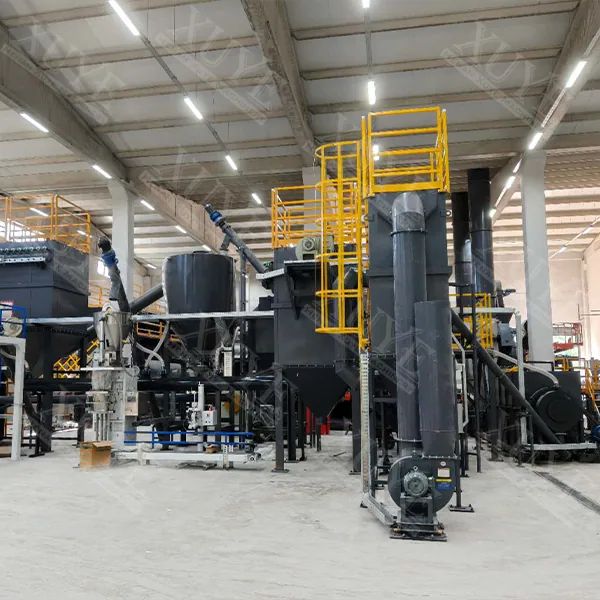
Activated Carbon Furnace is the core equipment in the production of high-quality activated carbon. It provides the necessary thermal environment for the carbonization and activation processes, transforming raw biomass or coal into porous activated carbon with a high adsorption capacity.
Due to increasing demand for water purification, air treatment, and energy storage applications, industries worldwide are investing in advanced activated carbon furnaces to ensure stable production, energy efficiency, and environmental compliance.
1. What is an Activated Carbon Furnace?
An Activated Carbon Furnace is a specialized high-temperature thermal system designed to process raw materials such as coconut shells, wood, nutshells, bamboo, coal, or petroleum coke. It operates under controlled atmosphere conditions to convert these raw materials into activated carbon.
The furnace can serve two primary functions:
Carbonization – Heating raw materials in a low-oxygen environment (400–700°C) to remove volatile substances and produce char.Activation – Treating the char at higher temperatures (800–1000°C) with oxidizing gases (steam or CO2) to develop microporous and mesoporous structures, which greatly increase surface area.
2. Main Types of Activated Carbon Furnaces
2.1 Carbonization Furnace
Used for the initial pyrolysis of raw materials.
Operates in oxygen-limited conditions.
Types: Batch carbonization furnace, continuous carbonization furnace, and rotary carbonization furnace.
2.2 Activation Furnace
Used after carbonization to create pores.
Steam or CO2 is introduced to react with carbon at high temperature.
Types: Rotary activation furnace, vertical activation furnace, fluidized bed activation furnace.
2.3 Rotary Furnace for Activated Carbon
The most popular type for large-scale continuous production.
Features:
Rotating cylinder ensures uniform heating.
High throughput capacity.
Suitable for coconut shell activated carbon, coal-based carbon, and bamboo carbon.
2.4 Batch Activated Carbon Furnace
Small-scale, cost-effective, and flexible.
Suitable for laboratories or pilot production lines.
3. Structure of an Activated Carbon Furnace
A standard activated carbon kiln includes:
Furnace Body – High-temperature-resistant steel and refractory lining.Heating System – Gas burners, electric heaters, or biomass fuel systems.Temperature Control System – PLC or digital controllers.Gas Supply System – Steam generators or CO2 pipelines for activation.Cooling Section – Rapid cooling chambers to prevent spontaneous combustion.Dust Collection and Exhaust System – Ensures compliance with environmental standards.
4. Working Principle of Activated Carbon Furnace
Step 1: Carbonization
Raw materials are fed into a carbonization furnace 400–700°C in limited oxygen. Volatile matter is driven off, producing char.
Step 2: Activation
The char is transferred into an activation furnace (such as a rotary furnace). High-temperature steam or CO2 reacts with the carbon:
C + H2O → CO + H2
C + CO2 → 2CO
These gas–solid reactions etch the carbon structure, forming micropores and mesopores.
Step 3: Cooling and Collection
Activated carbon is cooled in an inert environment and then collected for screening and packaging.
5. Advantages of Activated Carbon Furnaces
High Production Efficiency
Rotary activation furnaces can run continuously, handling tons of raw material per day.
Energy Saving
Waste heat recovery systems reduce fuel consumption by 15–20%.
Uniform Product Quality
Precise temperature and gas flow control ensure stable pore structures.
Versatile Raw Material Adaptability
Capable of processing coconut shells, bamboo, coal, and other feedstocks.
Eco-Friendly Operation
Equipped with dust removal and exhaust treatment systems.
6. Applications of Activated Carbon Furnace
Water Treatment – Drinking water purification, wastewater treatment.Air Purification – Industrial exhaust gas filtration, VOC removal, indoor air systems.Chemical Industry – Catalyst carrier, solvent recovery.Pharmaceutical Industry – Drug decolorization, toxin adsorption.Food and Beverage – Sugar refining, alcohol purification.Energy Storage – Lithium battery anodes, supercapacitor carbon.
7. How to Choose the Right Activated Carbon Furnace?
Production Scale – Small labs may use batch furnaces; large factories require rotary kilns.Raw Material Type – Coconut shells prefer rotary kilns; coal may use vertical furnaces.Energy Source – Choose between gas, electricity, or biomass heating.Automation Level – Advanced PLC systems reduce labor costs and improve stability.Environmental Compliance – Ensure furnaces have gas scrubbing and dust filtration systems.
Activated Carbon Rotary Kiln Parameter capacity 5-8t/d 8-10t/d 10-12t/d 12-15t/d 15-20t/d Dryer model HG-800 HG-1000 HG-1200 HG-1500 HG-1800 Dryer power 3kw 4kw 7.5kw 15kw 22kw continuous carbonization furnace model TH-1500 TH-1500 TH-1800 TH-2000 TH-2000 Carbonization temperature 600-850℃ Fixed carbon content after carbonization 70-80% Carbonization furnace drum material 309S/310S 309S/310S 309S/310S 309S/310S 309S/310S Activation furnace model HN-5 HN-8 HN-10 HN-12 HN-15 Activation furnace power 15kw 22kw 30kw 37kw 37kw Activation furnace chamber material QQ345+nano thermal insulation board+refractory Activation temperature 850-950℃ Activator Water vapor or Phosphoric acid (customized according to customer requirements, equipment design will be updated) Activation time 1-2h Cooling machine model GTL-1004 GTL-1204 GTL-1206 GTL-1504 GTL-1506 Temperature after cooling ≤40℃ Activated carbon crusher model SGP-400 SGP-400 SGP-600 SGP-800 SGP-800 Activated carbon finished product size 4-60mesh Activated carbon iodine value 800-1300mg/g Activated carbon specific surface area 800-1500m²/g Activated carbon strength ≥95 CTC ≥60% Filling density 0.45-0.55g/cm3 Activated carbon ash ≤3%
Activated Carbon Rotary Kiln Video VIDEO
 XUYE EQUIPMENT