 ОБОРУДОВАНИЕ XUYE


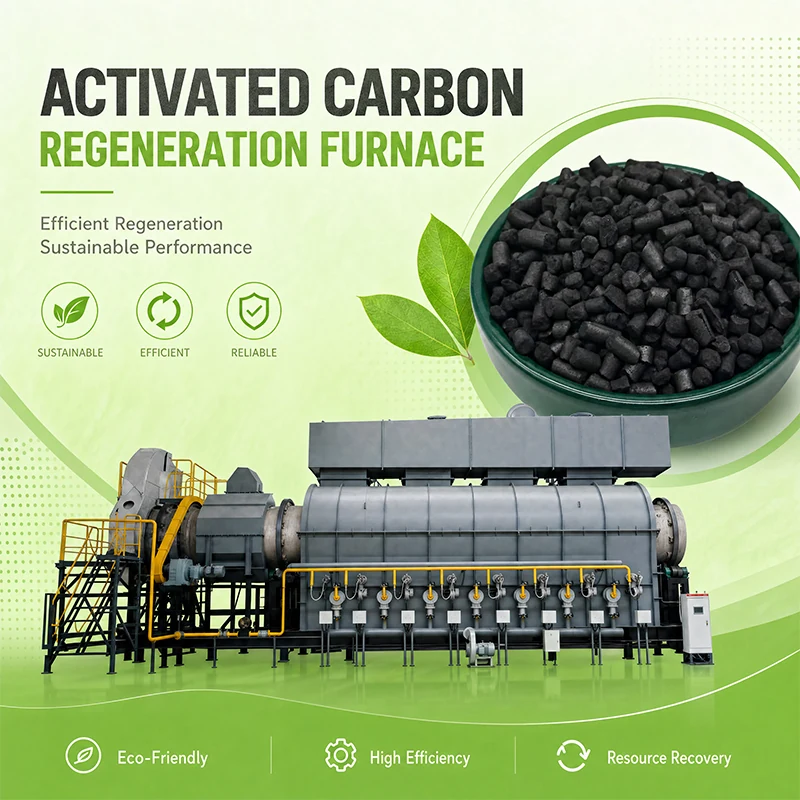
Activated Carbon Regeneration Furnace
The Activated Carbon Regeneration Furnace is an industrial thermal treatment system designed to regenerate spent activated carbon and restore part of its adsorption capacity. It is widely used in industries where activated carbon is employed to remove organic pollutants, impurities, odors, and other contaminants from liquids or gases.
During industrial operation, activated carbon gradually loses its adsorption capacity because its pores become occupied by adsorbed substances. Instead of directly disposing of the exhausted carbon, thermal regeneration can be used to remove suitable adsorbed contaminants and recover its adsorption performance.
Henan Xuye Machinery provides activated carbon regeneration furnace solutions for different types of spent activated carbon, processing capacities, and industrial operating conditions.
The regeneration process generally includes feeding, drying, heating, thermal decomposition, activation or pore restoration when required, cooling, and product collection.
Our equipment can be designed according to the characteristics of the spent carbon, moisture content, contamination type, required treatment capacity, and site conditions.
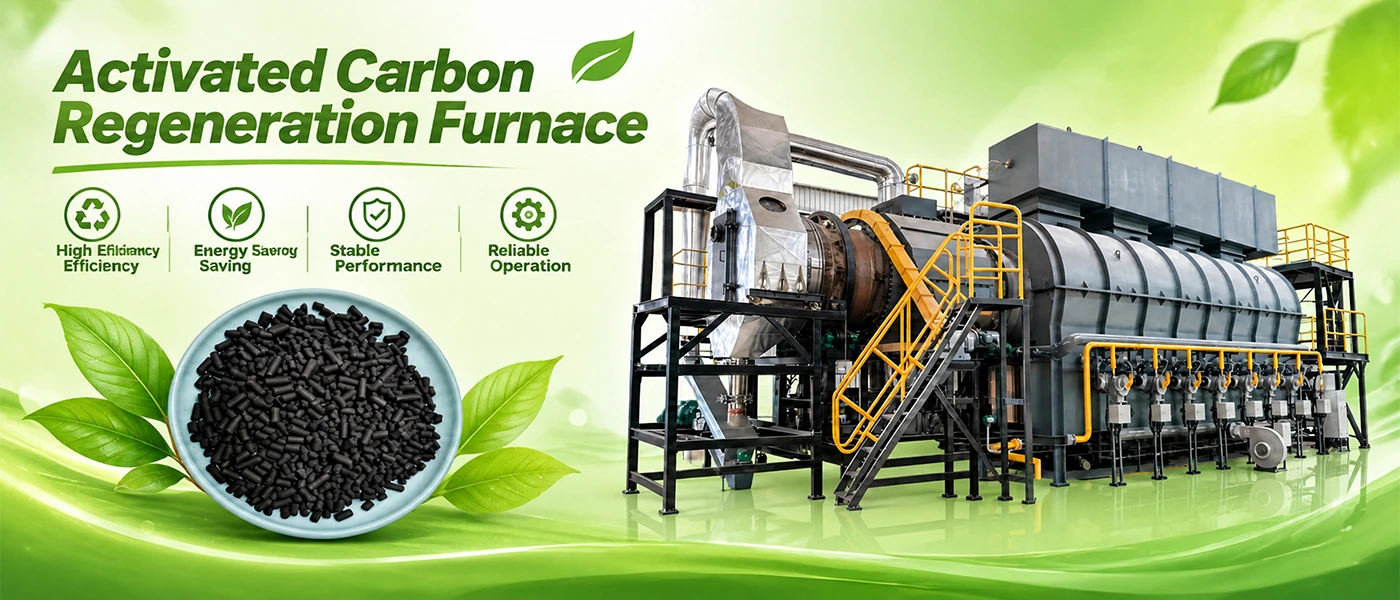
Working Principle of Activated Carbon Regeneration Furnace
The Activated Carbon Regeneration Furnace mainly uses high-temperature thermal treatment to remove contaminants accumulated inside the pores of spent activated carbon.
The regeneration process involves several stages.
1. Feeding
Spent activated carbon is transported into the feeding system. Depending on the material characteristics, feeding equipment can be configured to ensure stable and continuous material supply.
2. Drying
Spent activated carbon may contain approximately 20%–60% moisture, depending on its source and previous application. The material needs to be dried before entering the high-temperature regeneration stage.
3. Heating and Thermal Decomposition
The dried carbon enters the regeneration furnace, where the temperature is gradually increased. Under controlled thermal conditions, adsorbed organic substances and other suitable contaminants are decomposed, volatilized, or removed.
4. High-Temperature Regeneration
The activated carbon undergoes high-temperature treatment, typically around 850–900°C depending on the carbon properties and process requirements.
Steam or other controlled activation conditions may be introduced when required to help restore the pore structure and adsorption performance.
5. Cooling and Discharging
After thermal treatment, the regenerated activated carbon is cooled under suitable conditions before being discharged and collected.
The final regenerated product can be tested for iodine value, adsorption capacity, hardness, ash content, and other relevant indicators.

Main Features of Activated Carbon Regeneration Furnace
1. High-Temperature Thermal Regeneration
The furnace is designed for high-temperature treatment of spent activated carbon. The operating temperature can be adjusted according to the material characteristics and regeneration process.
2. Continuous Processing Design
Depending on the production requirements, the system can be configured for continuous feeding and discharging, supporting stable industrial-scale regeneration operations.
3. Adjustable Temperature Control
The furnace can be equipped with a temperature monitoring and control system to manage different heating zones and maintain the required operating conditions.
4. Customized Processing Capacity
The equipment can be designed for different treatment capacities, with reference configurations ranging from 1 to 20 tons per day. Actual output depends on raw material properties, moisture content, furnace configuration, and process conditions.
5. PLC Automatic Control
The optional PLC control system integrates temperature monitoring, operating parameter adjustment, and equipment operation management, helping operators manage the regeneration process.
6. Industrial Gas Treatment System
The regeneration process may produce volatile gases and decomposition products. A suitable exhaust gas treatment system can be configured according to the contaminants, emission requirements, and local environmental regulations.
7. Recovery of Activated Carbon Resources
Thermal regeneration provides an alternative to disposing of suitable spent activated carbon. It helps reduce the consumption of fresh activated carbon and supports industrial resource recycling.
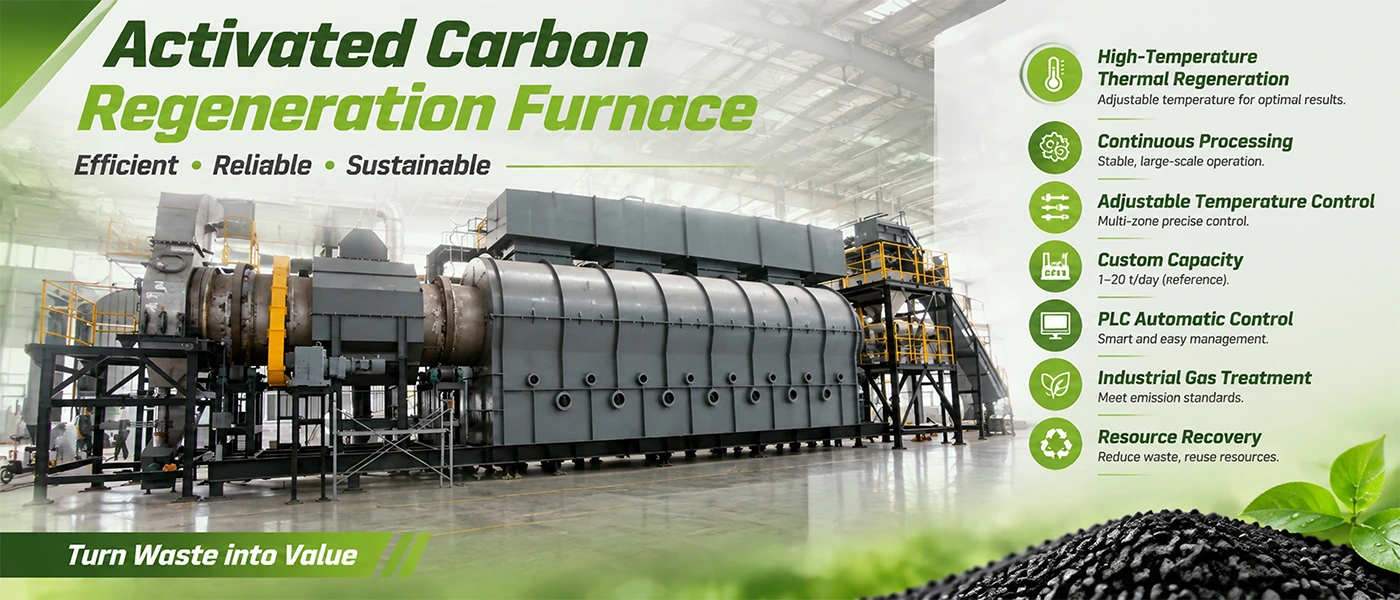
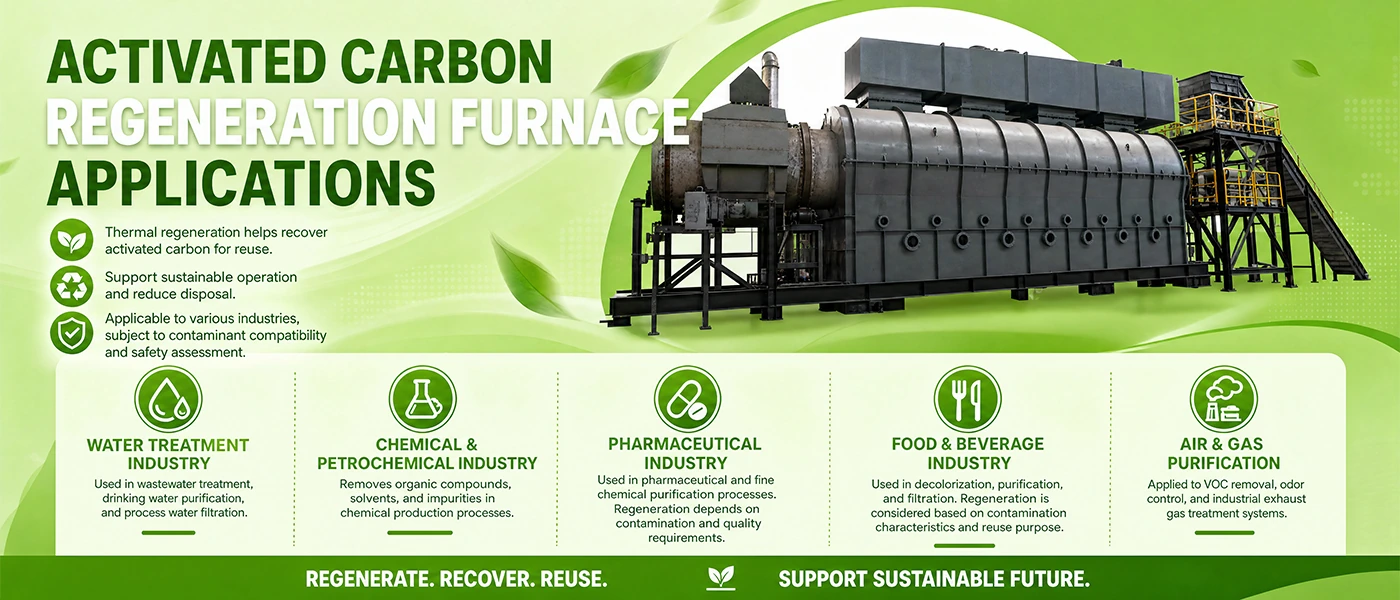
Applications of Activated Carbon Regeneration Furnace
Activated carbon regeneration equipment is suitable for recycling spent activated carbon from various industrial applications.
Water Treatment Industry
Activated carbon is widely used in industrial wastewater treatment, drinking water purification, and process water filtration. Spent carbon may contain organic pollutants, color compounds, and other adsorbed substances.
Thermal regeneration can help recover suitable activated carbon for reuse.
Chemical and Petrochemical Industry
Activated carbon is used to remove organic compounds, solvents, and impurities in chemical production processes.
The regeneration furnace can be used to treat suitable spent carbon generated by adsorption and purification systems.
Pharmaceutical Industry
Activated carbon is commonly used in pharmaceutical and fine chemical purification processes. Regeneration feasibility depends on the adsorbed substances, contamination levels, and applicable product quality requirements.
Food and Beverage Industry
Activated carbon is used in decolorization, purification, and filtration processes. Suitable spent carbon may be considered for thermal regeneration after evaluating the contamination characteristics and intended reuse.
Air and Gas Purification
Activated carbon adsorption systems are widely used for VOC removal, odor control, and industrial exhaust gas treatment.
Regeneration equipment can be applied to suitable spent carbon from these systems, subject to contaminant compatibility and safety assessment.
Factors Affecting Activated Carbon Regeneration Efficiency
The regeneration efficiency is not determined by furnace temperature alone. Several factors influence the final performance of regenerated activated carbon.
Adsorbed Chemical Composition
Different contaminants have different thermal decomposition characteristics. Organic substances may be removed through thermal treatment, while certain inorganic compounds may remain in the carbon.
Initial Moisture Content
High moisture content increases the energy required for drying and affects the overall processing capacity.
Regeneration Temperature
Temperature must be selected according to the type of activated carbon and adsorbed substances. Excessive temperature may damage the carbon structure and reduce product yield.
Residence Time
The time spent inside the furnace affects the degree of contaminant removal and the final adsorption properties.
Steam and Activation Conditions
When necessary, controlled steam activation can help restore pore structures. However, excessive activation may result in carbon loss.
Customized Activated Carbon Regeneration Solutions
Every spent activated carbon regeneration project has different requirements.
Before recommending a suitable regeneration furnace, we need to understand the characteristics of your material and production objectives.
Our engineers can evaluate the following information:
- Type of spent activated carbon.
- Original activated carbon source.
- Moisture content.
- Adsorbed chemical composition.
- Required processing capacity.
- Expected regenerated carbon quality.
- Available factory space.
- Local environmental and emission requirements.
Based on this information, we can recommend a suitable furnace structure, heating system, feeding and discharging equipment, and exhaust gas treatment configuration.
Technical Specifications
| Вместимость | 5-8 т/д | 8-10t/d | 10-12t/d | 12-15t/d | 15-20t/d |
| Dryer model | HG-800 | HG-1000 | HG-1200 | HG-1500 | HG-1800 |
| Dryer power | 3kw | 4kw | 7.5kw | 15kw | 22kw |
| continuous carbonization furnace model | TH-1500 | TH-1500 | TH-1800 | TH-2000 | TH-2000 |
| Carbonization temperature | 600-850℃ | ||||
| Fixed carbon content after carbonization | 70-80% | ||||
| Carbonization furnace drum material | 309S/310S | 309S/310S | 309S/310S | 309S/310S | 309S/310S |
| Activation furnace model | HN-5 | HN-8 | HN-10 | HN-12 | HN-15 |
| Activation furnace power | 15kw | 22kw | 30kw | 37kw | 37kw |
| Activation furnace chamber material | QQ345+nano thermal insulation board+refractory | ||||
| Activation temperature | 850-950℃ | ||||
| Активатор | Water vapor or Phosphoric acid (customized according to customer requirements, equipment design will be updated) | ||||
| Activation time | 1-2h | ||||
| Cooling machine model | GTL-1004 | GTL-1204 | GTL-1206 | GTL-1504 | GTL-1506 |
| Temperature after cooling | ≤40℃ | ||||
| Activated carbon crusher model | SGP-400 | SGP-400 | SGP-600 | SGP-800 | SGP-800 |
| Activated carbon finished product size | 4-60mesh | ||||
| Activated carbon iodine value | 800-1300mg/g | ||||
| Activated carbon specific surface area | 800-1500m²/g | ||||
| Activated carbon strength | ≥95 | ||||
| CTC | ≥60% | ||||
| Filling density | 0.45-0.55g/cm3 | ||||
| Activated carbon ash | ≤3% | ||||
Certificate
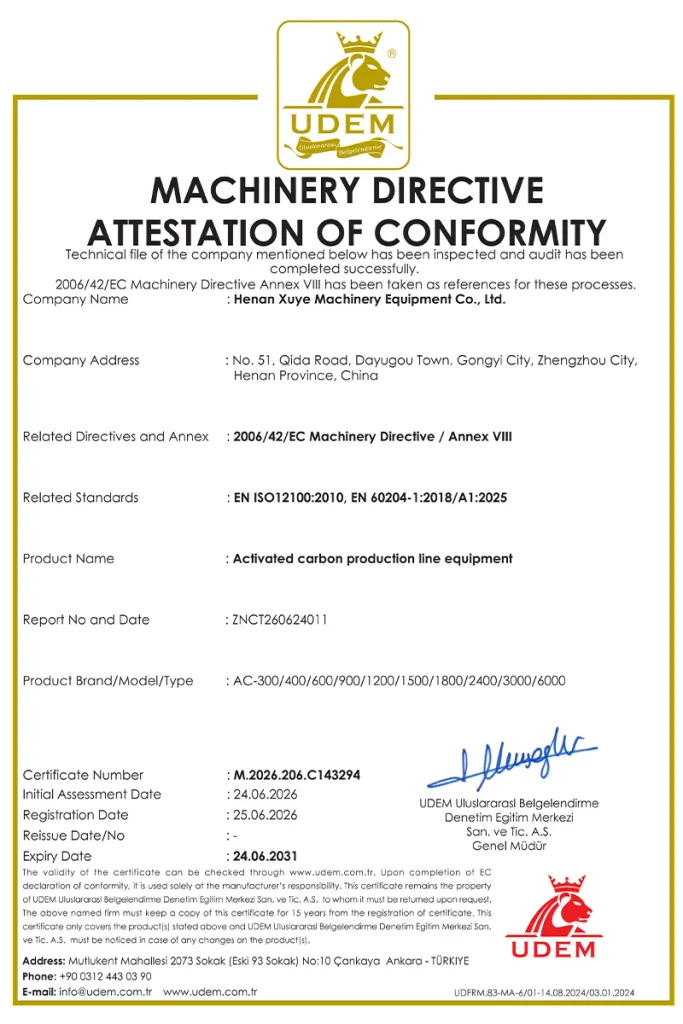
CE Certificate
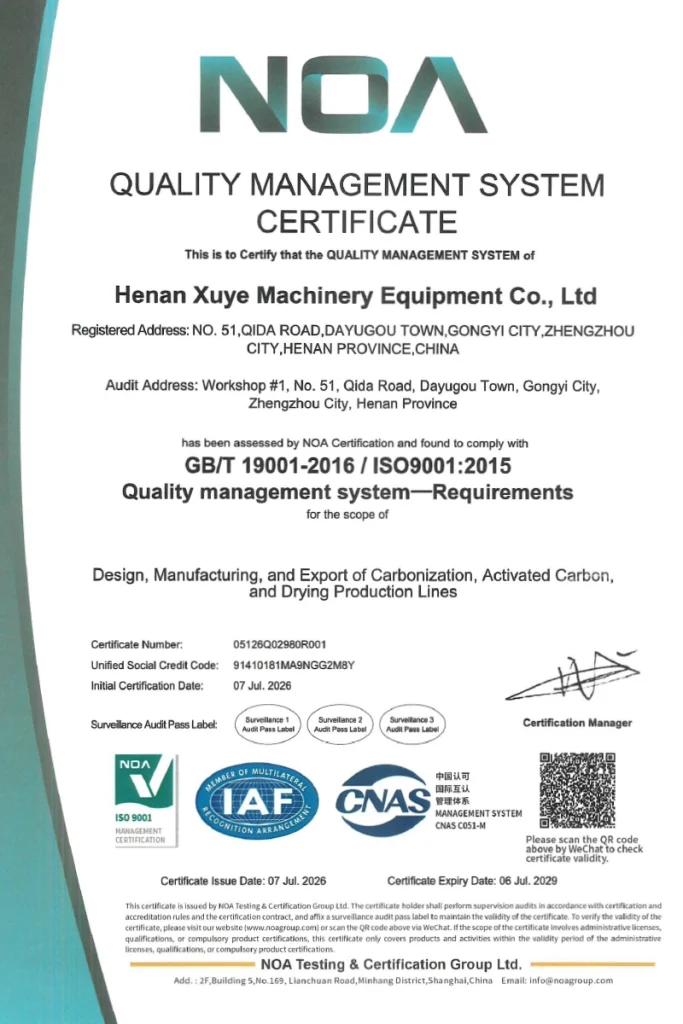
ISO Quality Management Certificate
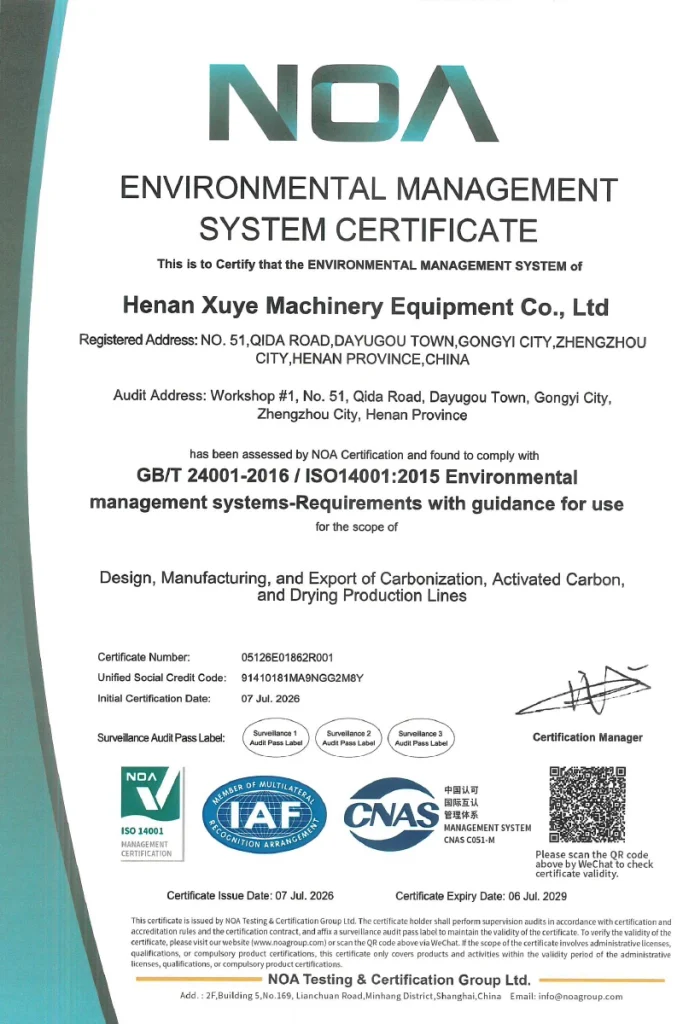
ISO Environmental Management Certificate
FAQ
Frequently Asked Questions About Activated Carbon Production Lines
The activation kiln is specially designed for processing almond shells into activated carbon. It can also be adapted to other biomass materials, such as coconut shells, walnut shells, apricot shells, and other suitable carbonized materials.
The production capacity depends on the equipment model, raw material characteristics, activation temperature, and processing time. Xu Ye Machinery can customize equipment according to customers’ production requirements.
Yes. We offer continuous rotary kiln systems designed for stable and efficient industrial production. The continuous feeding and discharging system helps reduce manual operation and improve production efficiency.
Yes. Xu Ye Machinery provides customized solutions based on production capacity, raw materials, factory layout, heating methods, and local operating conditions.
The kiln uses high-temperature activation technology. Carbonized almond shells are heated inside the kiln under controlled conditions, with steam or other suitable activation agents introduced to develop a porous structure and increase the specific surface area of the activated carbon.
Different heating methods can be selected according to project requirements, including direct heating and indirect heating. We can recommend a suitable heating system based on the production process, energy source, and operating conditions.
A carbonization furnace converts almond shells or other biomass materials into charcoal through oxygen-limited heating. An activation kiln further processes the carbonized material using high temperatures and activation agents to develop pores and produce activated carbon.
The final product is almond shell-based activated carbon, which can be processed into granular, powdered, or other specified forms depending on the production process and customer requirements. It can be used in water purification, air purification, and industrial adsorption applications.
