 XUYE 장비


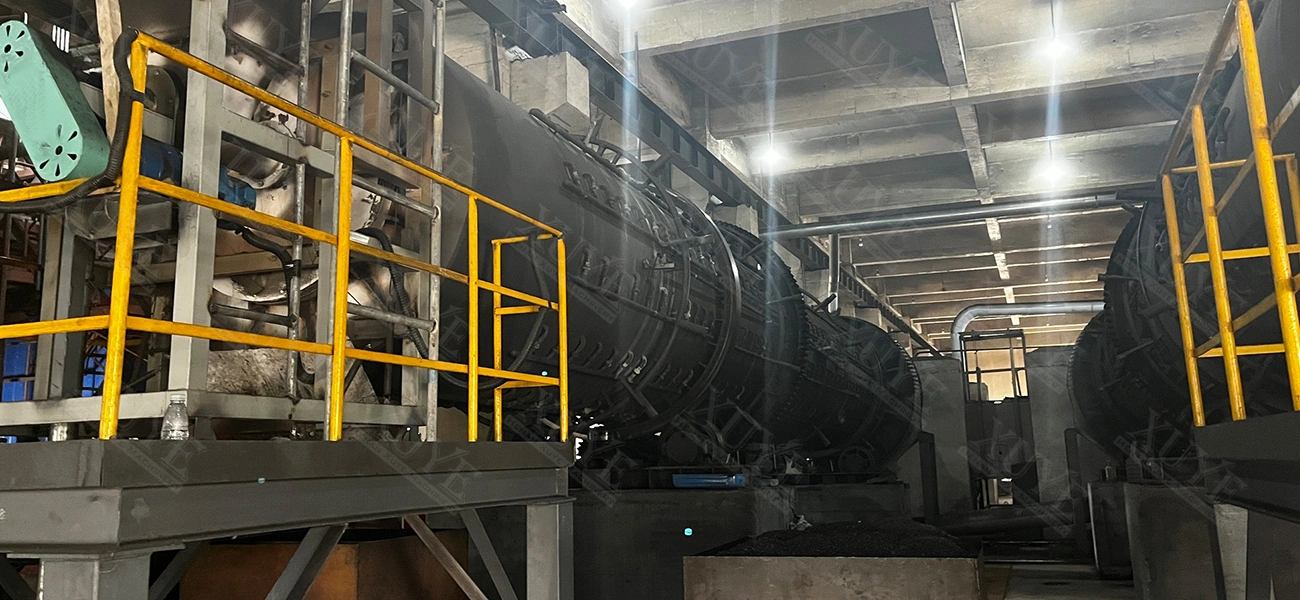
활성탄 로터리 킬른
- 크기용량에 따라 맞춤 설정
- 원재료코코넛 껍질, 톱밥, 석탄 등
- 작동 온도800°C-1100°C
- 활성화 방법물리적 방법
- 액티베이터수증기
- 자동 제어 시스템PLC
- 가열 방법내부 난방
Activated Carbon Rotary Kiln
The activated carbon rotary kiln is a key piece of equipment used in the high-temperature carbonization and activation stages of activated carbon production. Through continuous mechanized operations, it converts carbon-containing raw materials such as coal and wood into highly adsorbent activated carbon products. Its core function is to achieve pyrolysis of the material under high-temperature conditions. It is widely used in environmental protection, chemical engineering, food processing, gold extraction, and other fields for water purification, decolorization, and purification, as well as waste gas treatment.
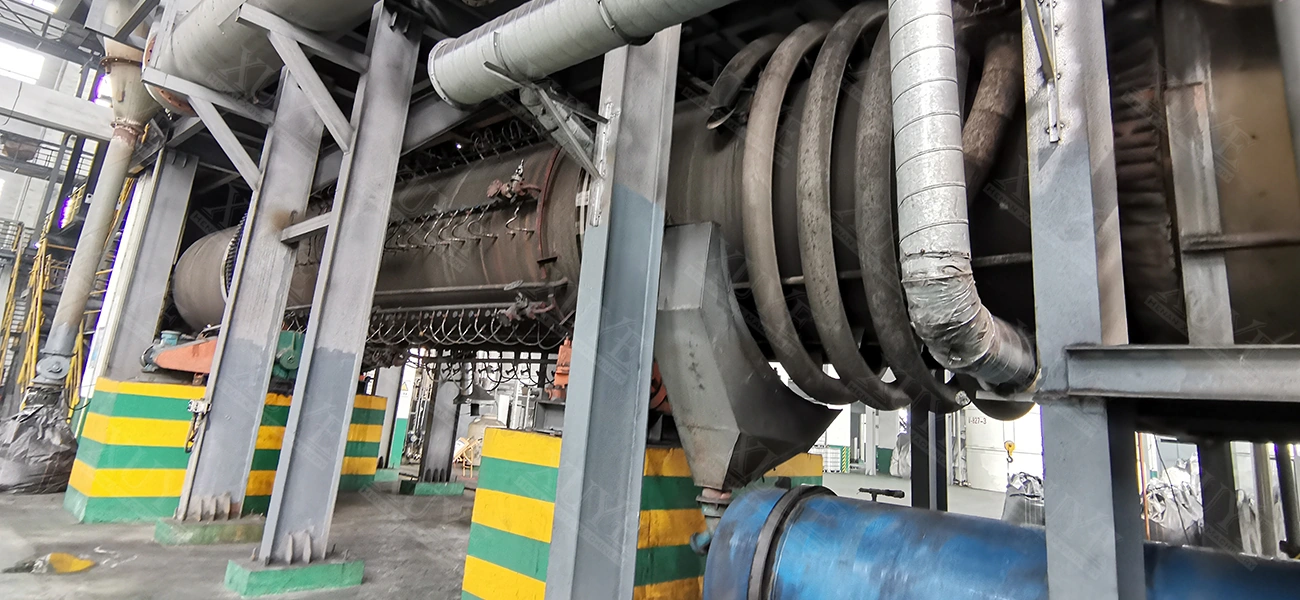
In today’s era of green and sustainable development, activated carbon, as a crucial adsorption material, is ubiquitous. From the pure water we drink and the clean air we breathe to product purification and wastewater and waste gas treatment in industrial production, activated carbon plays a crucial role as a “master of purification.” The development of high-performance activated carbon is inseparable from a core process—activation—and the core equipment that supports this process: the activation furnace.

Among various activation equipment, the activated carbon rotary kiln, with its unique technological advantages, has become the absolute workhorse for large-scale, continuous production of high-quality activated carbon. It is more than just a simple heating device; it is a complex system that integrates thermodynamics, chemical engineering, and precision control.
What is an activated carbon rotary kiln?
Activated carbon rotary kiln Basic Definition
1.An activated carbon rotary kiln is a long, slightly inclined, slowly rotating, high-temperature industrial kiln. It continuously carbonizes and activates carbon-containing raw materials such as biomass (such as coconut shells, sawdust, and peach pits) or minerals (such as coal and asphalt) through sustained internal high temperatures and sufficient contact between the material and the activating medium.
2.Compared to traditional batch kilns (such as slep kilns and rake kilns), rotary kilns achieve a fully automated and continuous process: feeding, carbonization, activation, cooling, and discharging. This significantly improves production capacity, efficiency, stability, and energy savings.
Overview of the activated carbon rotary kiln Working Principle
The operating principle can be summarized as follows:
1.Feeding: Pre-treated raw materials (with a specific particle size and moisture content) are continuously and evenly fed into the kiln from the kiln tail (high end) via a sealed feeder.
2.Movement: Driven by the rotation of the kiln (typically 0.5-5 rpm) and a certain inclination angle (usually 2-5°), the material is continuously moved toward the kiln head (lower end) by gravity. Simultaneously, it is repeatedly scooped up and scattered by the lifting plates on the kiln wall, forming a uniform material curtain.
3.Heating and Reaction: Heat from the main burner at the kiln head creates a temperature field within the kiln, ranging from low to high. The material undergoes drying and carbonization stages, ultimately entering the core activation zone. Here, high temperatures (800-1100°C) and injected activators (such as steam and flue gas) react with carbon atoms in a redox reaction, selectively burning away disordered carbon and etching a well-developed porous structure.
4.Discharge and Cooling: Upon discharge from the kiln head, the activated carbon material, hot and activated, enters a supporting cooling device (such as a rotary cooler) for rapid cooling to prevent oxidation and combustion from contact with air, thereby ensuring product quality and yield.
5.Tail gas treatment: The exhaust gas rich in combustible components generated during the entire process is discharged from the kiln tail, enters a special secondary combustion chamber for complete incineration, and after the waste heat is recovered, it is treated by a purification system to meet emission standards.

The Ten Core Attributes and Advantages of Activated Carbon Rotary Kilns
To understand why rotary kilns reign supreme in activated carbon production, one must delve into their ten key attributes, which collectively constitute their unparalleled technical advantages.
1. Exceptional Continuous Processing Capability
This is the most prominent advantage of rotary kilns. Unlike batch furnaces that process material in cycles, rotary kilns operate 24/7 uninterrupted, achieving very high single-line production capacity. This is crucial for meeting the enormous global demand for activated carbon, with annual outputs reaching thousands or even tens of thousands of tons.
2. Precise and Flexible Temperature Control
High-quality activated carbon requires precise activation temperature profiles. Modern rotary kilns employ multi-zone heating technology and multiple thermocouples along the kiln length to monitor and independently control the temperature in the drying, carbonization, and activation zones. PLC/DCS control systems precisely adjust fuel and air flow, keeping temperature fluctuations within a very narrow range (±5°C), ensuring highly consistent product performance batch after batch.
3. Adjustable Material Residence Time
The time material spends in the kiln (residence time) is a key parameter affecting the degree of activation. By infinitely adjusting the kiln’s rotation speed and tilt angle, operators can easily control the total time from feeding to discharge (typically between 30 minutes and 2 hours). This provides great flexibility for producing activated carbons with different pore size distributions from different raw materials (coconut shell, coal-based).
4. High Mixing, Heat, and Mass Transfer Efficiency
The design of the internal lifters (or flights) is the soul of the rotary kiln. They continuously lift and cascade the material, creating a dense curtain, resulting in:
- Efficient Heat Transfer: Material fully contacts the hot gas flow, heating evenly, avoiding local over-burning or insufficient activation.
- Thorough Mass Transfer: The activating agent steam penetrates the surface of every material particle, ensuring complete and uniform reactions.
This highly efficient mixing ensures products have higher mechanical strength and more consistent adsorption performance.
5. Wide Range of Raw Material Adaptability
Rotary kilns can process various forms and types of raw materials, including:
- Granular materials: Coconut shell fragments, coal granules, peach pits, etc.
- Powdery materials: Wood chips, sawdust, pulverized coal (usually requires pelletizing first).
This adaptability allows producers to flexibly choose the most suitable raw material based on local availability and economics.
6. Integrated Activating Agent Injection System
The kiln shell is equipped with multiple sets of steam or flue gas injection pipes along its length. This allows for precise, quantitative injection of the activation medium into the most suitable temperature zone, facilitating reactions like C + H₂O → CO + H₂ to efficiently develop micropores and mesopores, precisely controlling the product’s pore size distribution.
7. Excellent Energy Efficiency and Heat Recovery System
Rotary kilns are highly efficient energy integration systems:
- Waste Heat Utilization: The heat from the high-temperature discharged activated carbon is recovered by the cooler, producing hot air that can be sent back to the burner for combustion support.
- Off-Gas Utilization: The combustible off-gases (rich in CO, H₂, CH₄) generated during carbonization and activation are directed to the kiln front burner as supplementary fuel, potentially saving 30%-40% of external fuel consumption, significantly reducing production costs.
8. High Level of Automation and Intelligent Control
Modern rotary kilns are a paradigm of the “lights-out factory.” The central control system integrates:
- Process Control (DCS/PLC): Automatically adjusts temperature, speed, tilt, feed rate, air flow, steam flow.
- Safety Interlocks: Automatic alarms and shutdowns for over-limit pressure or temperature.
- Data Logging and Analysis (SCADA): Records all production data for product quality tracing and process optimization.
This not only reduces manual operation but, more importantly, ensures production safety and product quality stability.
9. Robust and Durable Structural Design
To withstand long-term high temperatures and corrosive environments, rotary kilns use top-grade materials:
- Kiln Shell: Made from high-quality boiler steel plates, offering high strength.
- Refractory Lining: Lined with high-strength refractory bricks and insulation layers, resistant to high temperatures, abrasion, and chemical corrosion, ensuring a long service life.
- Support Structure: Large riding rings and roller assemblies ensure smooth support and reliable drive.
10. Environmental Compatibility and Ease of Exhaust Gas Treatment
Rotary kilns operate under negative pressure, minimizing dust and gas leakage. The exhaust gases are concentrated and discharged from the kiln rear, making it very convenient to connect to downstream integrated exhaust gas treatment systems (typically including a secondary combustion chamber, quench tower, desulfurization/denitrification units, baghouse filters, etc.). This ensures emissions fully comply with, or even exceed, the strictest environmental regulations (such as China’s Ultra-Low Emission standards).
Keywords: Rotary kiln advantages, Continuous production activated carbon, Energy-saving rotary kiln, Automated control, Environmental compliance
Comparison of Rotary Kilns with Other Activated Carbon Production Equipment
To better position the rotary kiln, let’s compare it with two common batch furnaces:

| Feature | Rotary Kiln | Slep Furnace (Batch) |
|---|---|---|
| Production Mode | Continuous | Batch |
| Automation Level | High | Medium |
| Single-Line Capacity | Very Large (10k+ tons/year) | Medium |
| Product Quality Consistency | Very High | Good |
| Energy Efficiency | High (Efficient heat recovery) | Medium |
| Labor Requirement | Low (1-2 operators for monitoring) | Medium |
| Flexibility | High (Many adjustable parameters) | Medium |
| Investment Cost | Higher | Medium |
| Suitable Scale | Large-Scale Production | Medium-Scale Production |
How to Choose the Right Activated Carbon Rotary Kiln?
Selecting a suitable rotary kiln is a complex systems engineering task that requires comprehensive consideration of the following factors:
- Raw Material Characteristics: Determine the primary raw material type (coconut shell, coal, wood chips), initial particle size, moisture content, etc. This influences kiln size, lifter design, and drying zone length.
- Target Production Capacity: Define the required annual or hourly output. This is the primary basis for determining the kiln’s diameter and length.
- Product Quality Requirements: The target product’s iodine value, methylene blue value, strength, and other indicators determine the required maximum activation temperature, residence time, and type of activating agent.
- Energy Type and Cost: Choose the appropriate combustion system based on the local price and availability of natural gas, diesel, or biomass fuels.
- Environmental Regulations: Local emission standards must be clearly understood to ensure the exhaust gas treatment solution provided by the supplier can meet compliance.
- Supplier Evaluation: Choose a manufacturer with extensive experience and successful case studies. Evaluate their:
- Technical Capability: Do they provide process design? Do they have a lab for testing?
- Manufacturing Capability: Kiln machining precision, material certifications.
- After-Sales Service: Installation commissioning, personnel training, timely spare parts supply.
- Automation Level: Select the appropriate level of automation for the control system based on your technical team’s capabilities, balancing investment and operational benefits.
Activated Carbon Rotary Kiln Application Areas
High-quality activated carbon produced in rotary kilns is widely used in:
- Water Treatment: Drinking water purification, wastewater treatment, groundwater remediation.
- Air Purification: Industrial waste gas treatment (VOCs removal, desulfurization, denitrification), indoor air purification, gas masks.
- Food and Pharmaceuticals: Sugar decolorization, monosodium glutamate purification, pharmaceutical raw material refinement, edible oil purification.
- Chemical and Metallurgical Industries: Catalyst carrier, gold recovery, solvent recovery.
- New Energy: Supercapacitors, lithium battery electrode materials.

활성탄 로터리 킬른 파라미터
| 항목 | 모델 | 용량 | 크기 |
| 회전식 활성화로(내부 가열식) | Φ1.5m×12m | 1-2t/d | 16000*2300*4000mm |
| Φ1.5m×15m | 2-3t/d | 20000*2700*4500mm | |
| Φ2.0m×18m | 4-5t/d | 22000*3000*4500mm | |
| Φ2.6m×20m | 5-8t/d | 26000*3600*5000mm |
활성탄 로터리 킬른 비디오

