PERALATAN XUYE


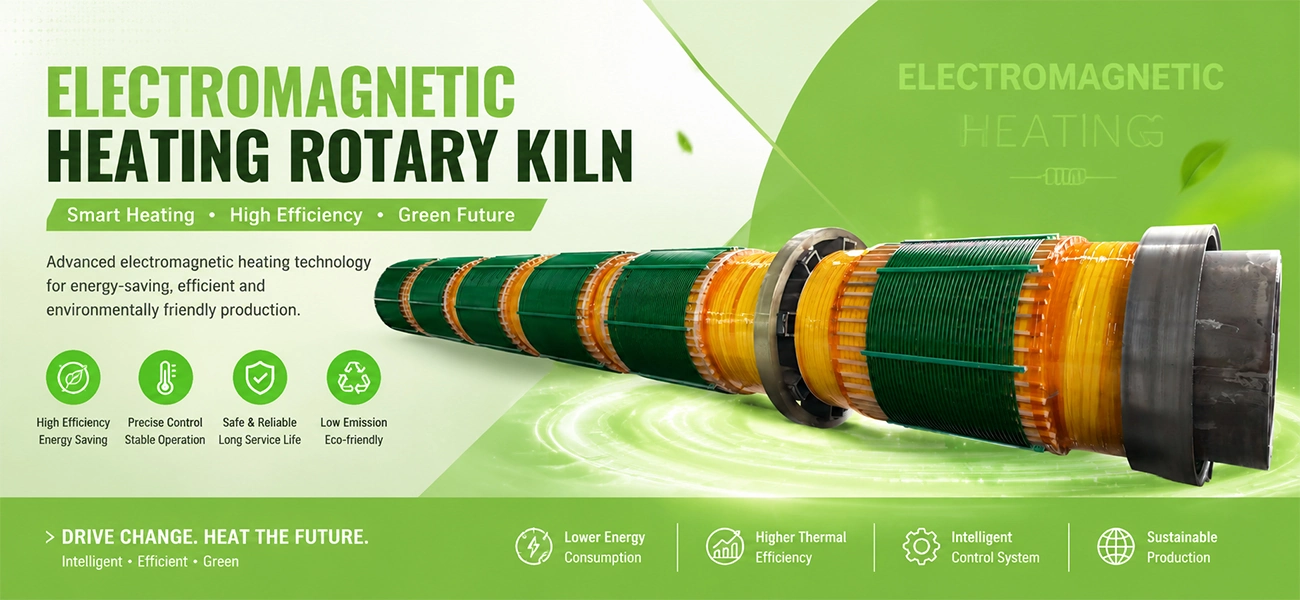
Electromagnetic Heating Rotary Kiln
Electromagnetic Heating Rotary Kiln is a high-efficiency industrial heating system designed for continuous thermal processing of high-value materials. Unlike traditional fuel-fired rotary kilns, it uses electromagnetic induction heating technology to generate heat directly within the metal kiln body, achieving rapid and uniform temperature transfer with lower energy consumption.
The rotary kiln rotates continuously during operation, allowing materials to move evenly through the heating zone while ensuring stable heat treatment quality. Because electromagnetic heating provides precise temperature control and fast thermal response, this type of kiln is widely used in advanced material processing industries such as lithium battery materials, catalyst activation, rare earth materials, metal powder treatment, ceramic materials, and chemical powders.
Compared with conventional gas or coal-fired kilns, electromagnetic heating rotary kilns offer several advantages, including cleaner operation, reduced carbon emissions, lower maintenance costs, and improved thermal efficiency. The closed heating structure also minimizes heat loss and creates a more stable production environment.
Modern electromagnetic rotary kilns are often equipped with PLC automatic control systems, temperature monitoring devices, and adjustable rotation speed functions, enabling intelligent and continuous production for industrial-scale applications.
Electromagnetic Heating Rotary Kiln Working Process
The Electromagnetic Heating Rotary Kiln is a continuous high-temperature processing system widely used for calcination, roasting, drying, pyrolysis, and heat treatment of high-value materials. Unlike traditional fuel-fired kilns, it uses electromagnetic induction heating technology to achieve rapid, uniform, and energy-efficient heating.
1. Raw Material Feeding
The raw materials are continuously fed into the rotary kiln through an automatic feeding system. Depending on the application, the materials may include battery materials, catalyst powders, rare earth materials, ceramic powders, metal oxides, lithium materials, or other advanced industrial materials.
2. Rotary Transmission and Material Movement
The kiln body rotates slowly through a motor and transmission system. As the cylinder rotates, the materials inside move gradually from the feeding end to the discharge end. Internal lifting plates help distribute the materials evenly, ensuring sufficient heat exchange and uniform processing.
3. Electromagnetic Induction Heating
The electromagnetic induction system generates a high-frequency magnetic field around the kiln shell. The metal kiln body rapidly converts electromagnetic energy into heat, which is then transferred to the materials inside the furnace.
Compared with traditional gas or coal heating methods, electromagnetic heating provides:
- Faster heating speed
- More precise temperature control
- Uniform temperature distribution
- Lower energy consumption
- Reduced heat loss
- Cleaner production process
4. High-Temperature Processing Stage
During rotation, the materials are heated continuously inside the kiln. According to the production requirements, the temperature can be accurately controlled for processes such as:
- Calcination
- Sintering
- Oxidation
- Reduction
- Drying
- Pyrolysis
- Carbonization
- Thermal decomposition
The residence time and temperature can be adjusted based on material characteristics and product quality requirements.
5. Exhaust Gas Treatment
The generated gases and dust are discharged through the exhaust system and can be connected to dust collectors, condensers, or environmental protection equipment for purification and heat recovery.
6. Material Cooling and Discharge
After completing the thermal treatment process, the finished materials are discharged from the outlet and enter the cooling system. The cooled products are then collected, packaged, or transferred to the next production stage.
7. Intelligent Control System
Modern electromagnetic heating rotary kilns are usually equipped with a PLC automatic control system and touch screen interface. Operators can monitor:
- Temperature
- Rotation speed
- Heating power
- Feeding speed
- Running status
This ensures stable operation, high production efficiency, and consistent product quality.
Electromagnetic Heating Rotary Kiln Application
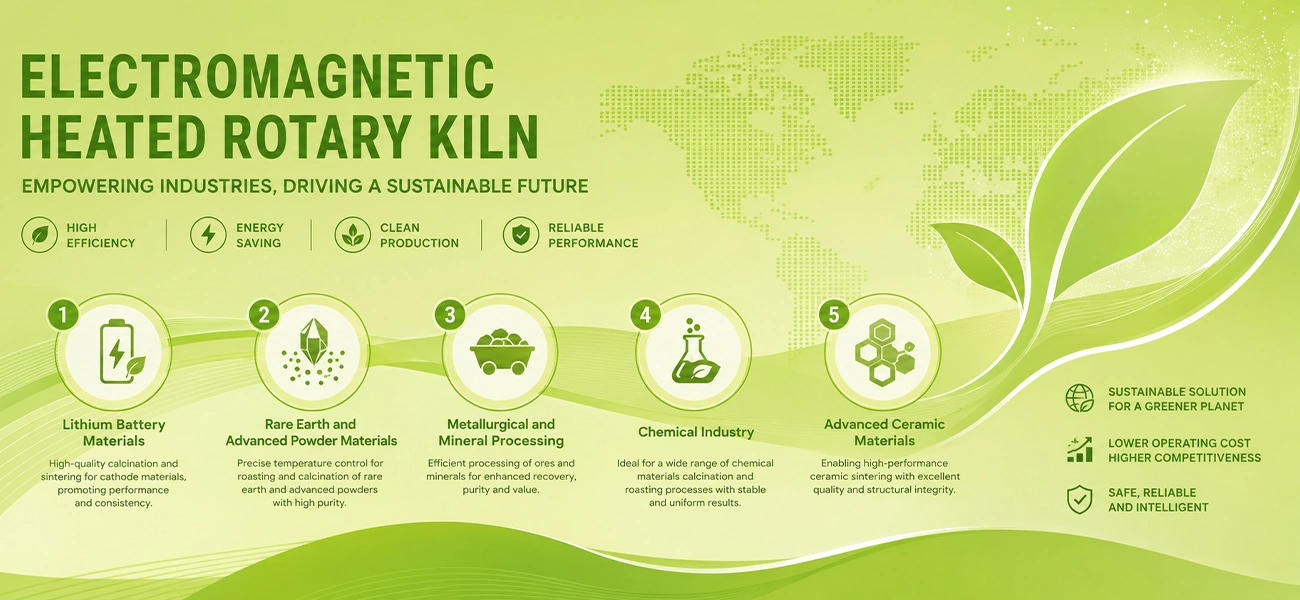
An Electromagnetic Heating Rotary Kiln is widely used in the processing of high-value industrial materials that require precise temperature control, clean heating, and energy-efficient continuous production. Compared with traditional gas or resistance heating kilns, electromagnetic heating technology provides faster thermal response, uniform heating, and lower energy consumption.
1.Lithium Battery Materials
The kiln is commonly used for calcination and heat treatment of lithium battery cathode and anode materials, including:
Lithium iron phosphate (LFP)
Ternary materials
Graphite powder
Silicon-carbon materials
Precise temperature control helps improve material consistency and electrochemical performance.
2.Rare Earth and Advanced Powder Materials
Electromagnetic rotary kilns are suitable for:
Rare earth oxides
Nano powders
Ceramic powders
Magnetic materials
The clean heating environment reduces contamination and improves product purity.
3.Metallurgical and Mineral Processing
The equipment can be applied in:
Metal oxide roasting
Mineral calcination
Catalyst activation
Slag treatment
Continuous rotary operation ensures stable material movement and uniform heating efficiency.
4.Chemical Industry
In the chemical sector, the kiln is used for:
Catalyst calcination
Chemical powder drying
High-temperature decomposition
Material activation
Electromagnetic heating provides rapid startup and accurate process control for sensitive materials.
5.Advanced Ceramic Materials
Suitable for the production of:
Alumina materials
Zirconia ceramics
Silicon carbide powders
Electronic ceramic materials
Uniform temperature distribution improves product quality and reduces thermal stress.